All guides Plate V Advanced

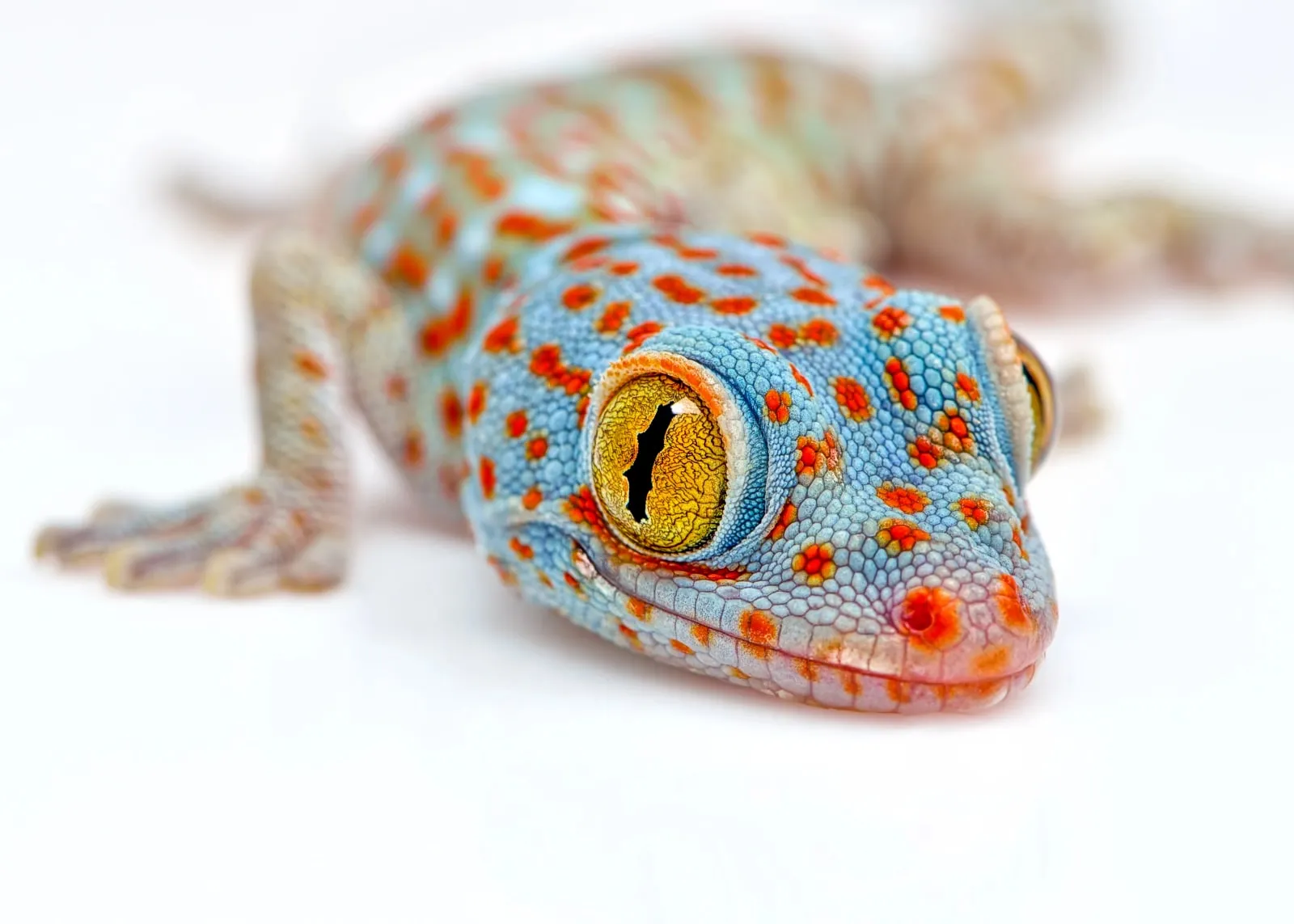
Tokay gecko

Gekko gecko

The world’s second-largest gecko, native to Southeast Asia, India and Indonesia. Welcomed in homes as a bringer of luck and wealth — and famous for its appetite, happily solving any household insect problem. Its readiness to bite makes it one for experienced keepers.

Tokay gecko (Gekko gecko)

Quick facts

Origin
Southeast Asia, India, Indonesia
Size
male up to 35 cm · female about 25 cm
Lifespan
up to 20 years in captivity
Activity
nocturnal
Enclosure
ideally 60×60×70 cm, vertical
Humidity
60–90%
01

Appearance

Their signature feature is the disc-shaped toe pads that let them walk effortlessly up any vertical surface — wood, glass, walls. The skin is pale grey or light blue with red, orange or brown spots. Males reach 35 cm and up to 150 g (specimens of 300 g are on record), reaching full size only after their second year.

02

Behaviour

Tokays are famous for their attitude — unless handled from hatching, they will readily try to bite, and the bite is strong and painful. In the wild they live alone; never house two males together, nor animals of very different sizes.

In breeding season the male gives the trademark barking call — “to-kay!” — which gave the species its name. Like many geckos, a threatened Tokay can drop its tail, which later regenerates.

03

Enclosure and conditions

An arboreal rainforest species, the Tokay needs a vertical enclosure: 40×45×60 cm minimum, ideally 60×60×70 cm. Thick bamboo or bark leaned against the back wall makes the best décor, with hides in both the warm and cool zones. A 10 cm layer of coir substrate holds humidity well.

Light on a 12/12 cycle; a UVA/UVB bulb is only needed with live plants, otherwise a regular 40–60 W bulb will do. Temperature 25–29 °C, up to 35 °C under the spot lamp; in winter add a ceramic bulb or heat cable if needed. Keep humidity at 60–90% with daily misting — spray the enclosure edges, because that’s how a Tokay drinks: almost never from a dish.

04

Food and water

Tokays are insectivores with an excellent appetite. Offer smaller animals small crickets, mealworms and small dubia; as they grow, move up to large dubia, superworms, crickets and even pinky mice. Dust 4 juvenile meals a week with calcium and 1–2 with vitamins; adults need 1–2 calcium and 1 vitamin meal weekly.

See our feeder insects for this species

The advice given in this text is the result of many years of experience combined with literature and should not be taken as the definitive and only way of keeping the species. To get a fuller picture and give your pet a long and healthy life, we advise you to consult several sources. If you have any further questions, you can contact us by e-mail: petreptilez@yahoo.com

Interested?

Contact us for more information about this pet, availability and care advice.